#7 That Which We Take For Granted
- Pray that Word sown across this mission would produce great fruit. Pray that Malawian lives would be transformed, that generations would be affected, that the Lord would claim for Himself a people from the many places we have visited.
- Pray for Abusas to be raised up, trained, and sent out to rural Malawian congregations. "The harvest is plentiful but the workers are few. Ask the Lord of the harvest, therefore, to send out workers into his harvest field." (Matthew 9:37-38)
- Pray for the Muslim population in Malawi, that they would continue hearing the gospel and being drawn to Christ. Pray that the Bibles we have distributed would feed into this great evangelistic work.
- Pray for the Lord's provision and protection for the poor in Chiuta and Livirizi.
- Praise the Lord for his protection this mission - our team has made it through without major sickness, injury or mishaps. Particularly, thank the Lord for keeping us safe on the roads.
- Thank the Lord for the many faithful people we have met across Malawi. We have been greatly encouraged that the Malawian church will continue to grow in our absence, and have found brothers and sisters with the same heart for Christ everywhere we have gone. We will miss them dearly.
Dear friends,
There are times when a job is well done, and we sit back, satisfied. There are times when there is more to be done, and we step forwards and do it. There are times when we cannot do everything we have come for, and we step aside, and pray.
This weekend the team experienced all three. It was, perhaps, the hardest weekend so far - but equally, perhaps, one of the most crucial. The Dayspring and Ma Robert set off north-east to Chiuta Presbytery, while the Mbawa and Duff branched north-west to Livirizi Presbytery. These are Yao-dominated, largely Muslim areas, and were described to us as the poorest presbyteries in Blantyre Synod.
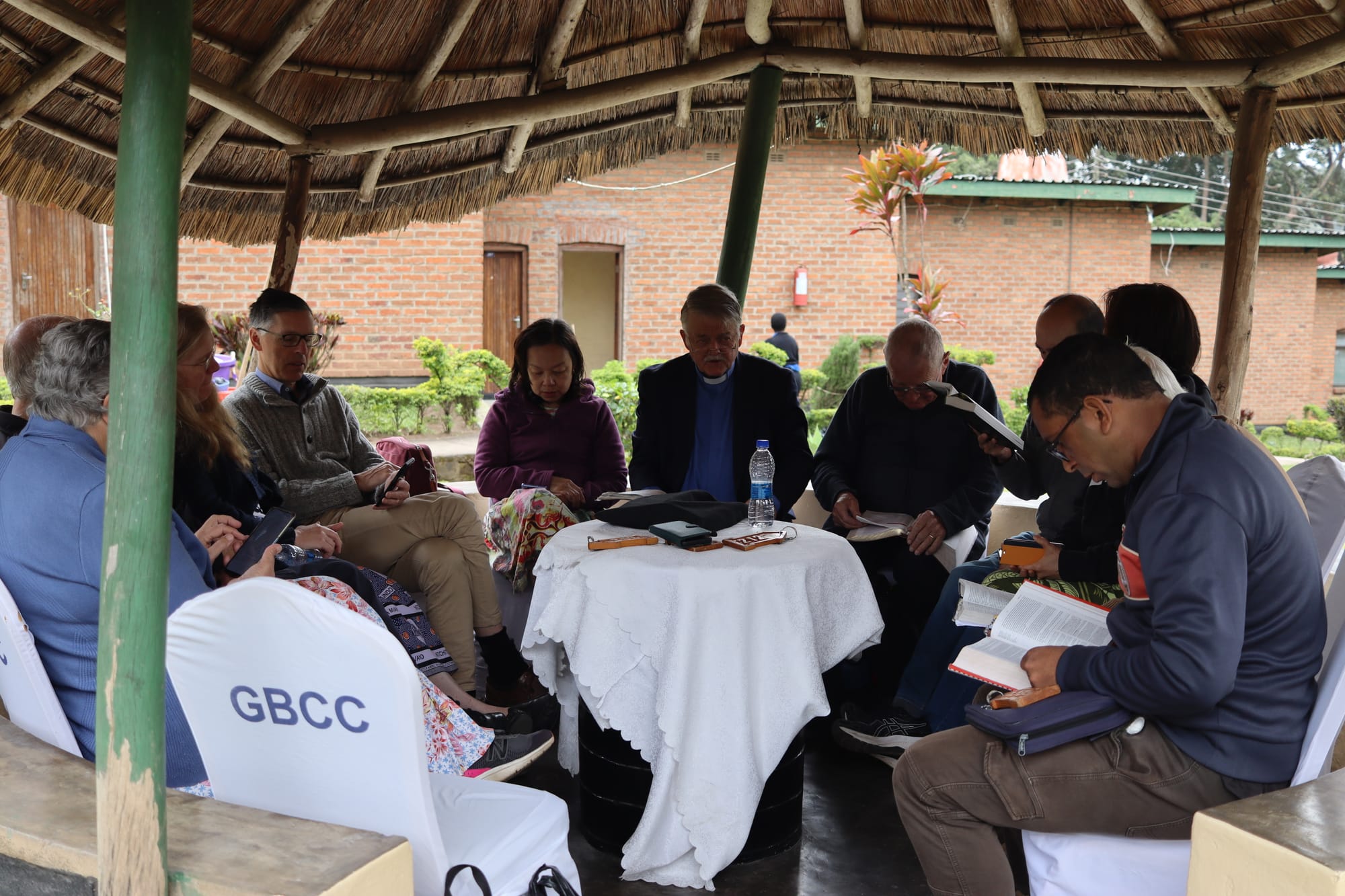
The Livirizi team - John, Ben, Jean, Bec, Michael, ST, Duan and Bruce - set off at 8:30am after a team devotion. After yet another car journey on a road that seemed to have more potholes than pavement, we arrived at the turn-off to Lombe. We drove along a dusty, winding track through a very dry and desolate area, strangely lacking in people compared with most places we've been to in Malawi. After asking several locals for directions we arrived at our destination.
It was certainly memorable - as we approached the church we saw scattered buildings, most without roofs and missing windows and doors. It brought to mind a post-apocalyptic scene. People are obviously experiencing great hardship. It begs the genuine question - how do some of these people survive?
Pulling up to the church there was only one other car, and we questioned again if we were in the right spot. Then we heard the most beautiful singing - the church raising their voices together in anticipation, welcome and praises to God for bringing about this visit. An amazing sight after all that we had just seen, and humbling too. We are challenged in our privileged, rich lives in Australia to see so many people with so little, who yet have so much joy and thanksgiving to God and who express it so freely and boldly.
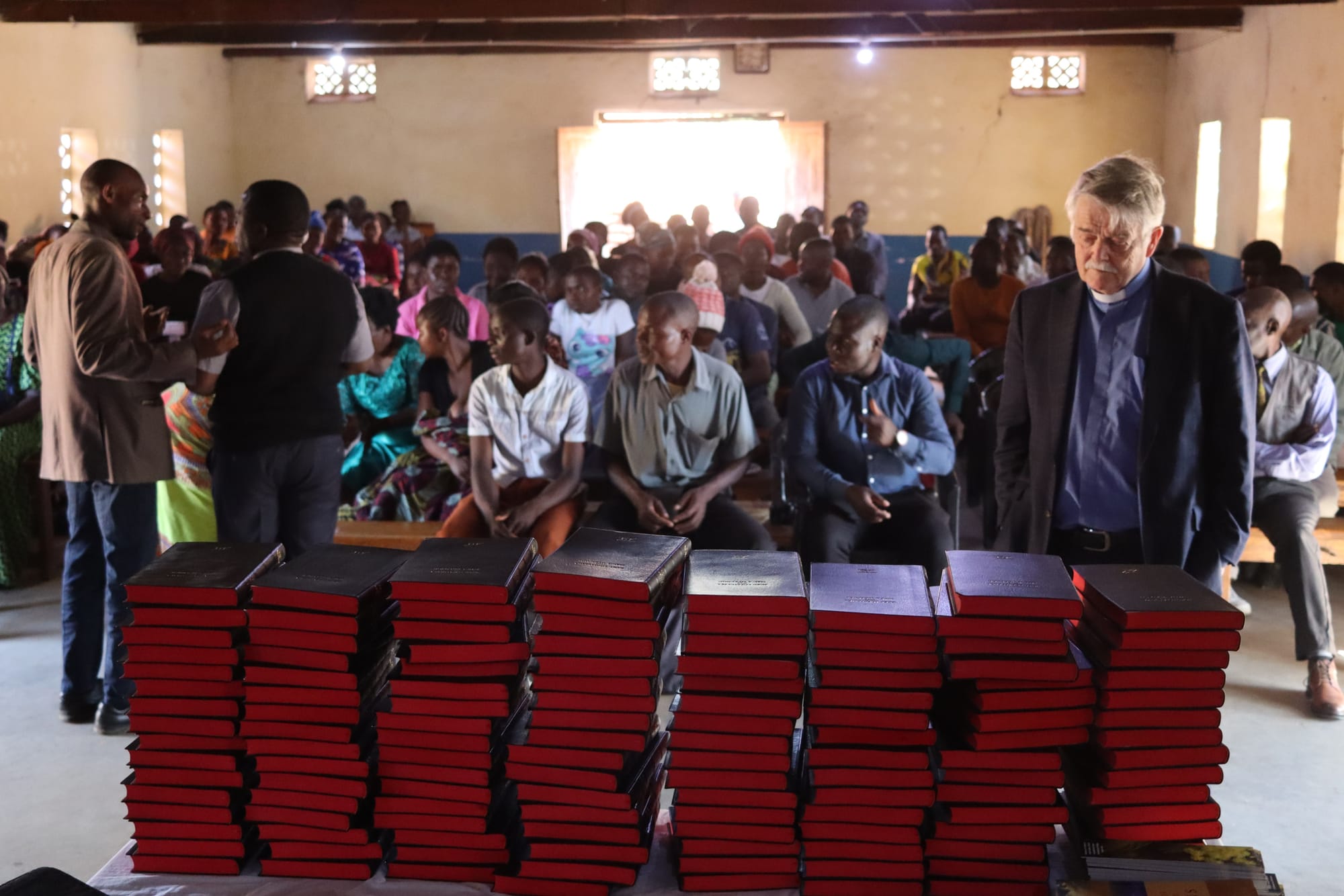
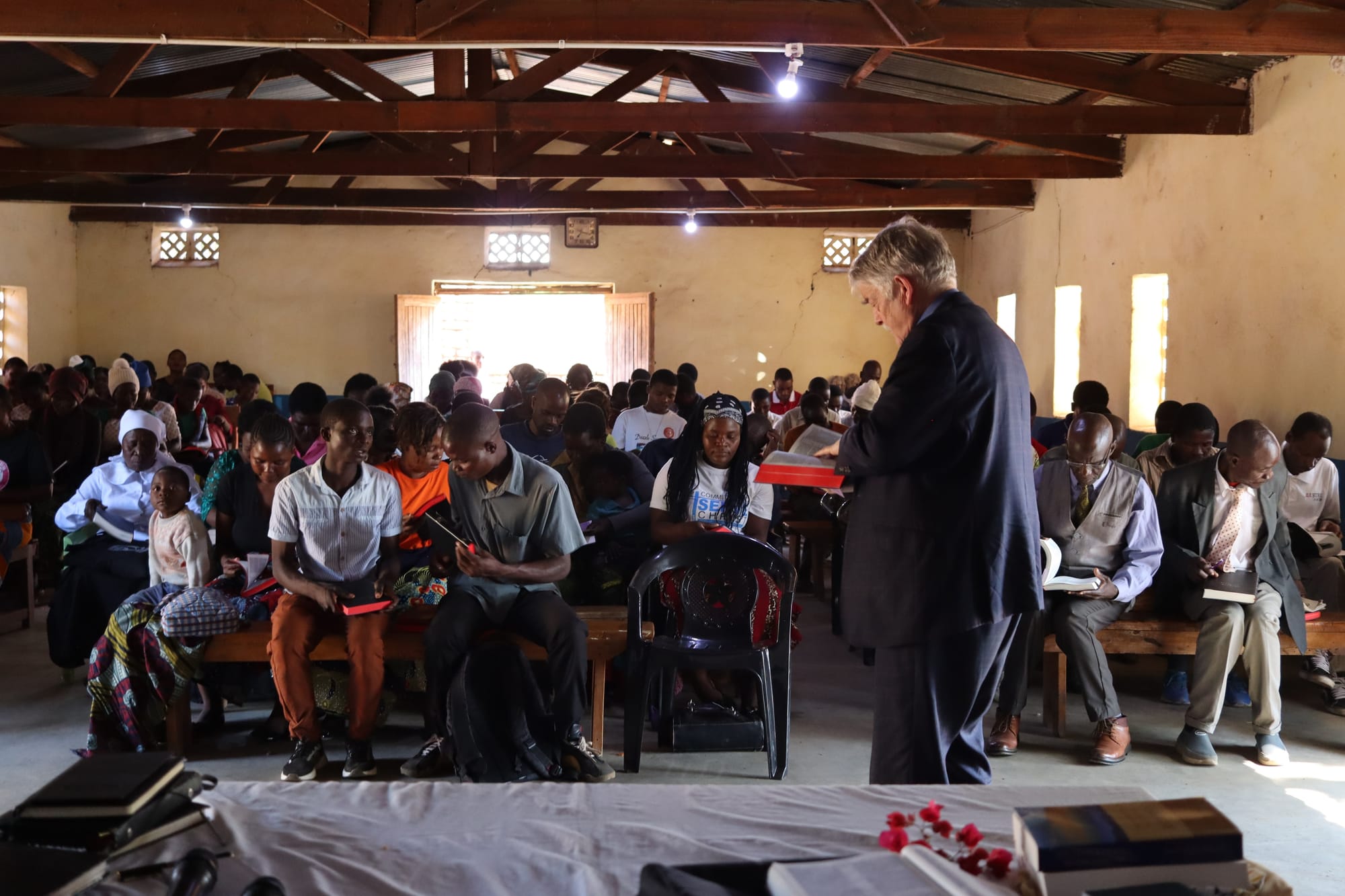
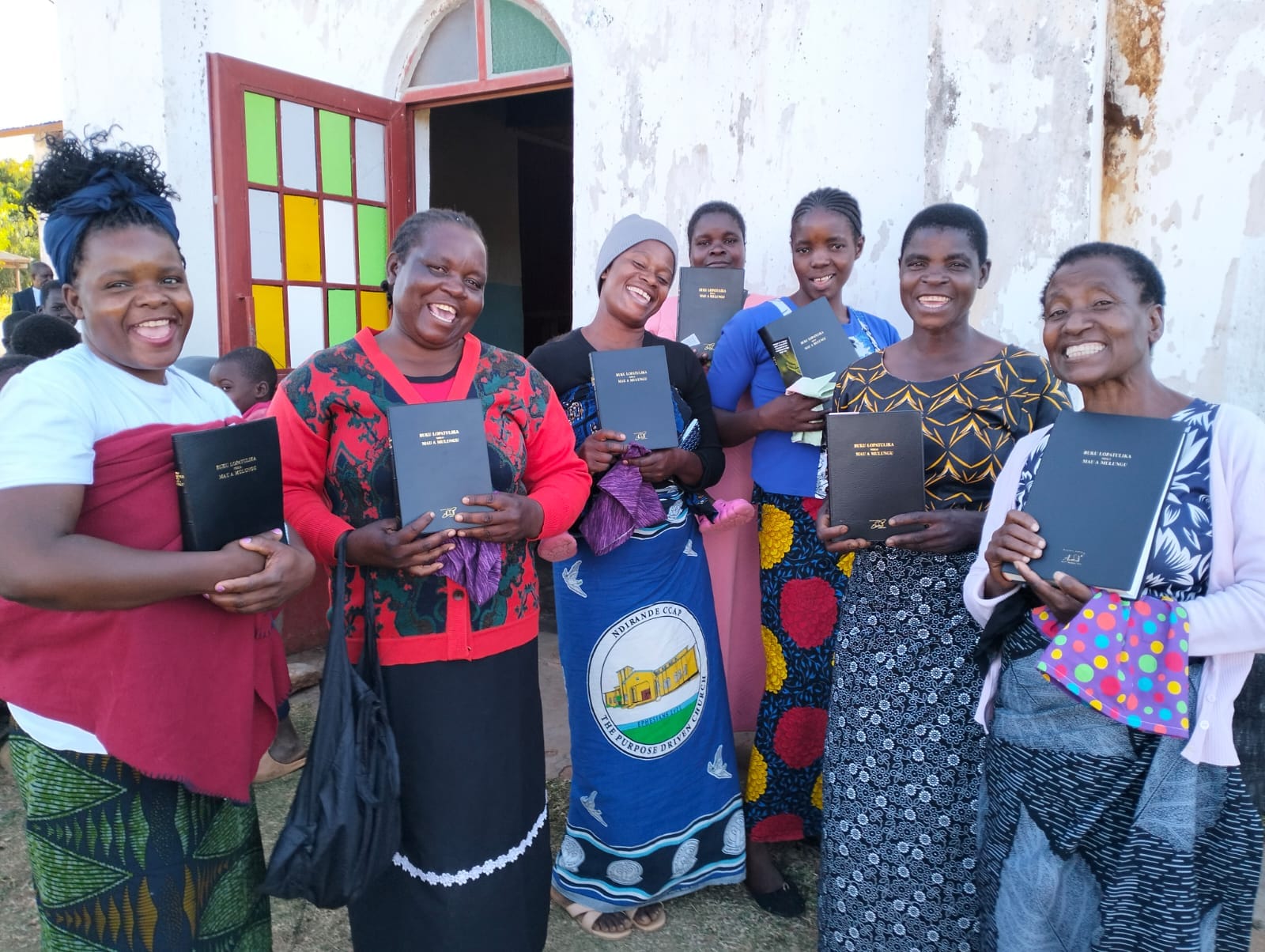
After being warmly welcomed, we proceeded to distribute the Bibles, bookmarks and cloth bags (for the women). We will never forget the pure joy on the faces of the people - who had never before owned their own Bible. We then divided into six groups to run demonstration COMA Bible studies. It was a great time of sharing, discussing baptism, the Holy Spirit and Jesus' substitution for sinners amongst many other topics.
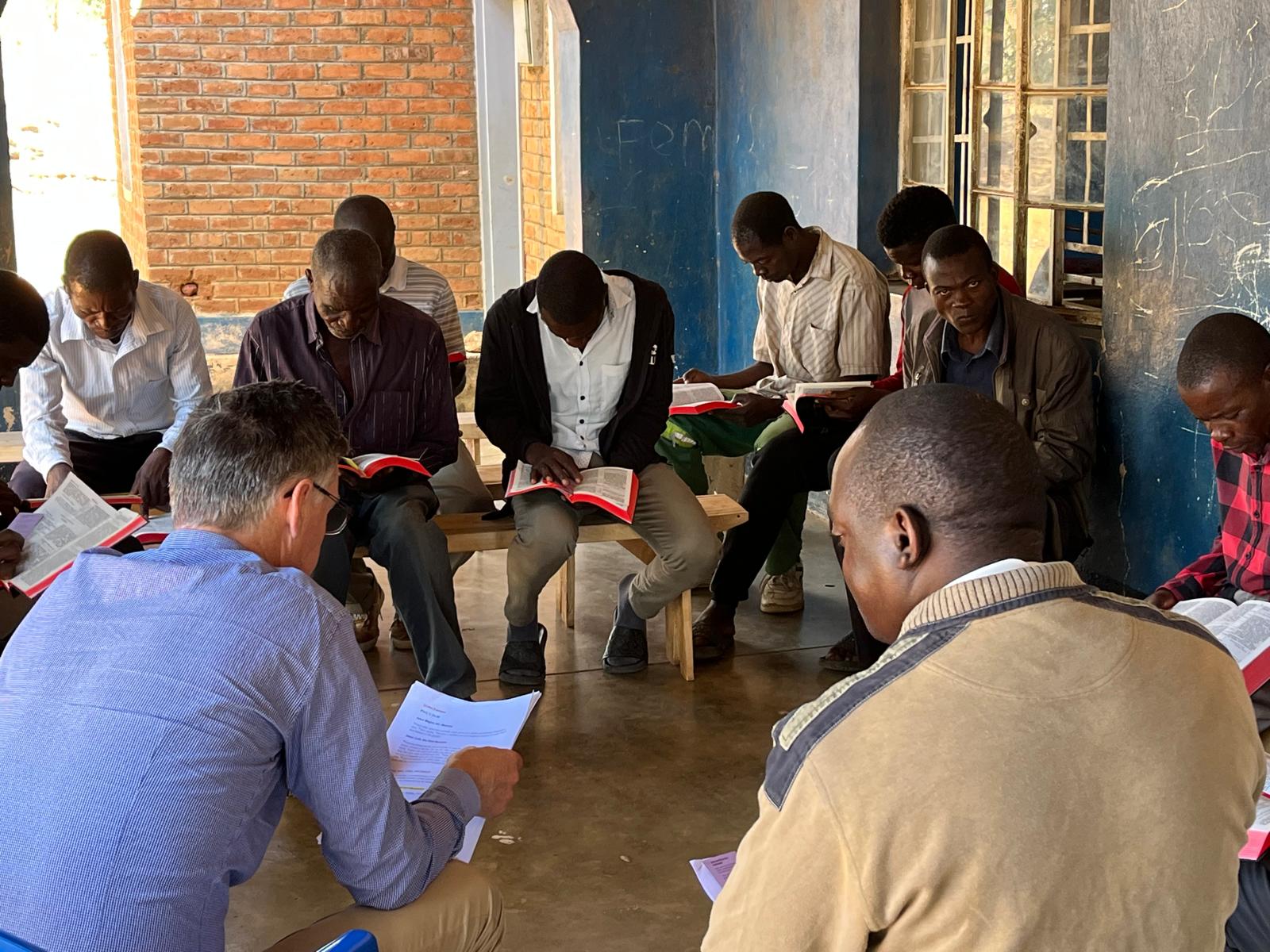
We have left people with a practical means of studying God's word without the need to have an Abusa (minister) present. This is so important, especially in these rural areas where most Abusas are caring for 6, 10, even 12 or more congregations - one teacher stretched across innumerable people when each congregation has hundreds. Churches can go for months without a visit from their Abusa, and even though there are many faithful elders and deacons caring for the churches in the meantime it is vital that the people are able to read their Bibles for themselves.
After the study we were invited to the Abusa's manse for a delicious lunch of Malawian staples. It is always special to share in fellowship over a meal, particularly as we are aware the people are sharing with us the little they have. Lunch meant we were slightly late in setting off to our next congregation, but hospitality is very important to the people here and we never want to miss an opportunity to build relationships with God's people.
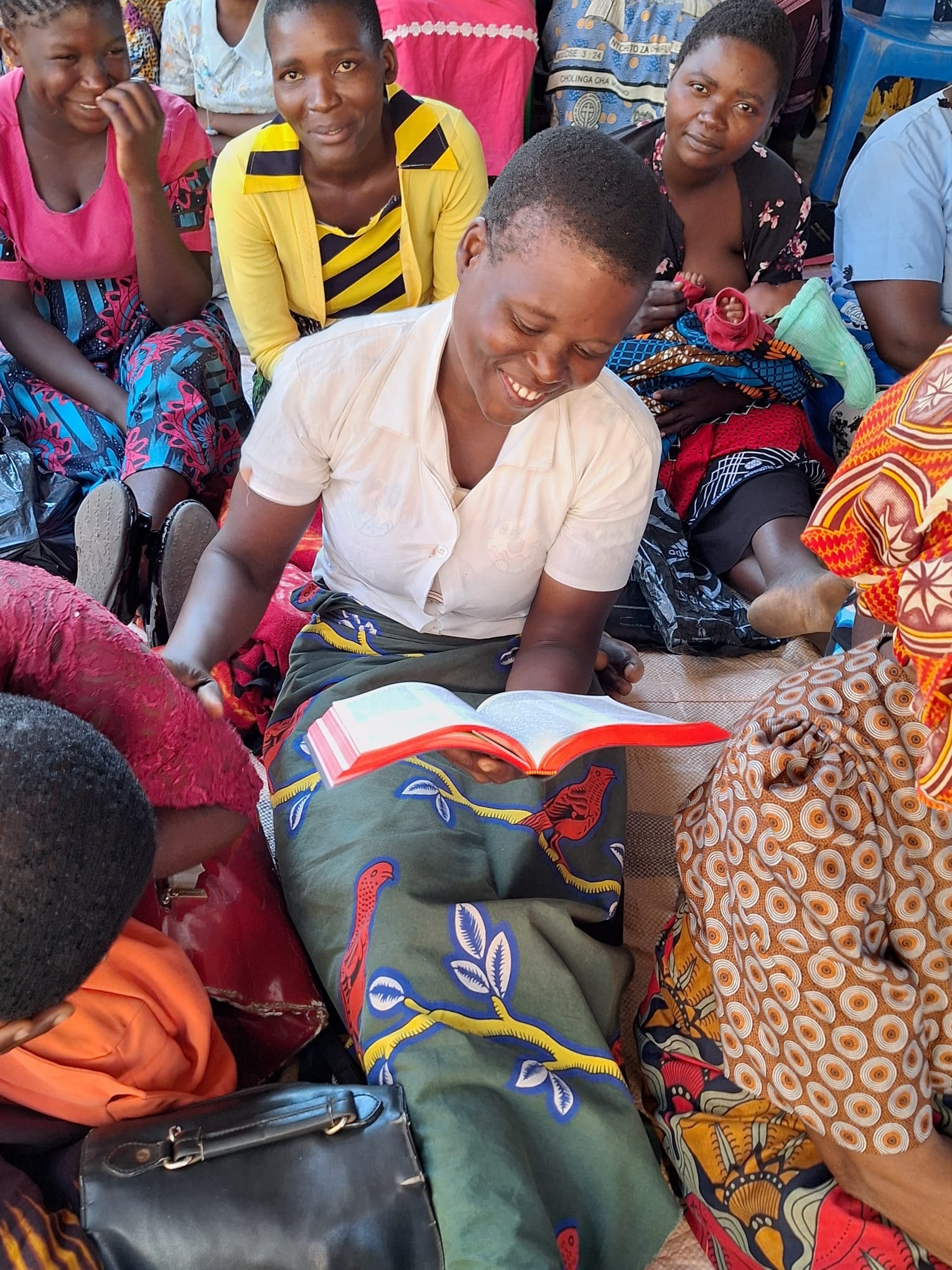
We set off again, this time an hour and a half drive to our next church, Njale CCAP. We presented 250 Bibles - each to the neediest of members. We were blessed by witnessing the congregation’s warm devotion to God, their obvious love of the Gospel of Christ, and commitment to taking the good news to those outside Christian faith. As the session clerk called out the Bible recipients' names, one young lady let out a loud whoop of delight when she heard her name read and leapt off the floor where she sat to receive her Bible. As soon as she sat down, she opened it and started reading. It was pure joy to see her hunger as she feasted on the Word of God! We found out later that her name is Emily. She was so thrilled to have her own Bible and said she would be reading it daily. It is witnessing responses like this that make our mission so rewarding.
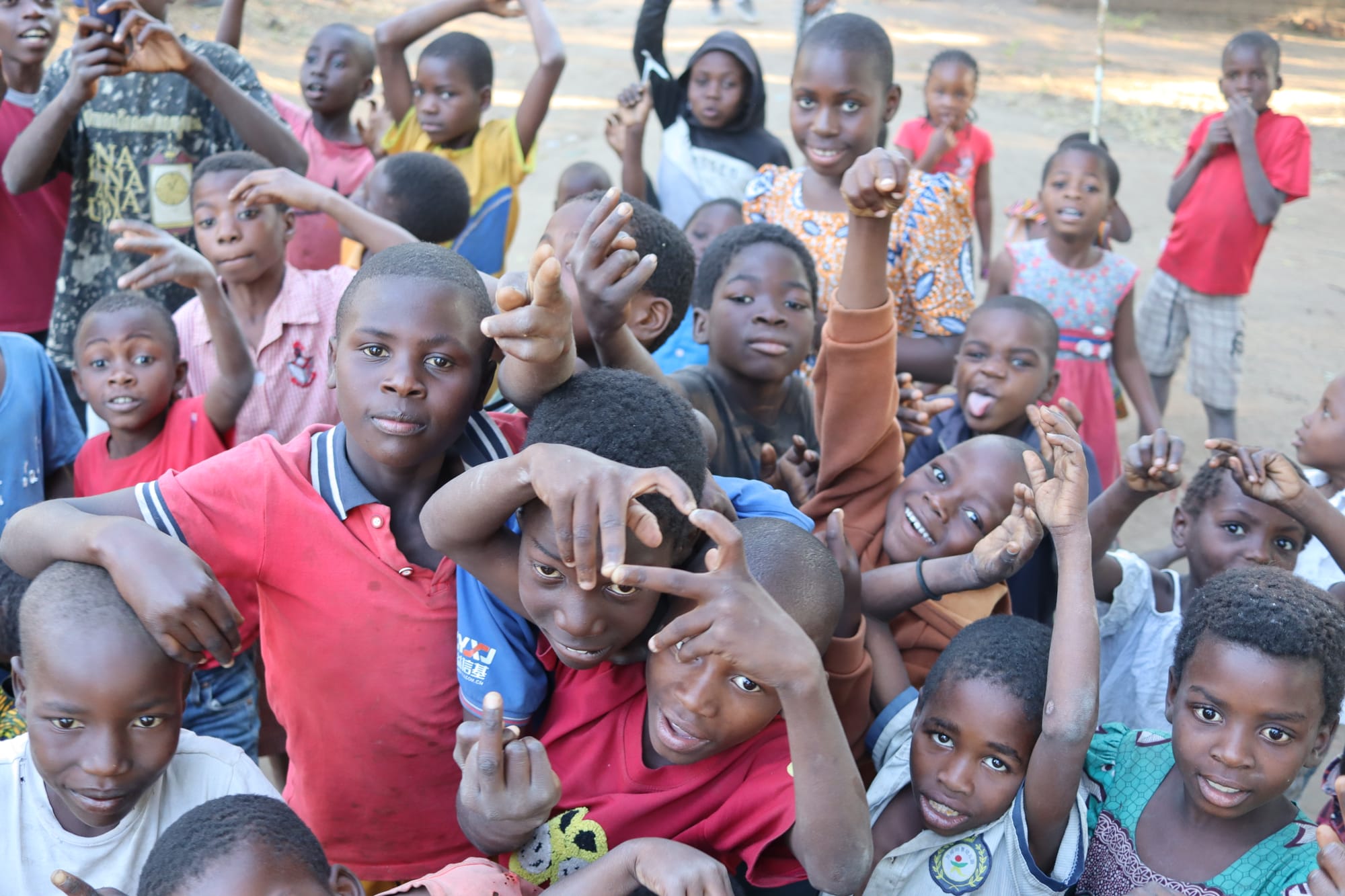
As the Bible distribution proceeded, it became clear we would not have time to run COMA in small groups, but that John would lead it with the whole congregation. Meanwhile, Duan found himself drawn to a group of village children milling around outside the church. Using a mixture of his own Chichewa knowledge, Google Translate and sign language, he tried to teach them Simon Says. Bec found the group not long after as she was roaming while taking photos and videos, and joined in. What proceeded was around an hour of play with these children, with games, reading the Bible, dancing and finally singing. To see their smiling, laughing faces and to connect with children when we could barely speak each other's languages warmed our hearts.
The Chiuta team - Doug, Diane, Steve, Miles, Hui, Soyoung, David and Tom - had a much more relaxed morning, leaving at a leisurely 9:30am (editor's comment: I would have preferred to be asleep at this time, but the people rise early here and of course the mission comes first). We wound our way north up the M1 with a pit stop at Zomba, the colonial capital, and wandered the grounds of Zomba CCAP. This is a lovely, old church, and we were able to greet the staff at the neighbouring CLAIM Bookshop - one of our partners in the mission, from whom we had purchased the hymn books we have been distributing.
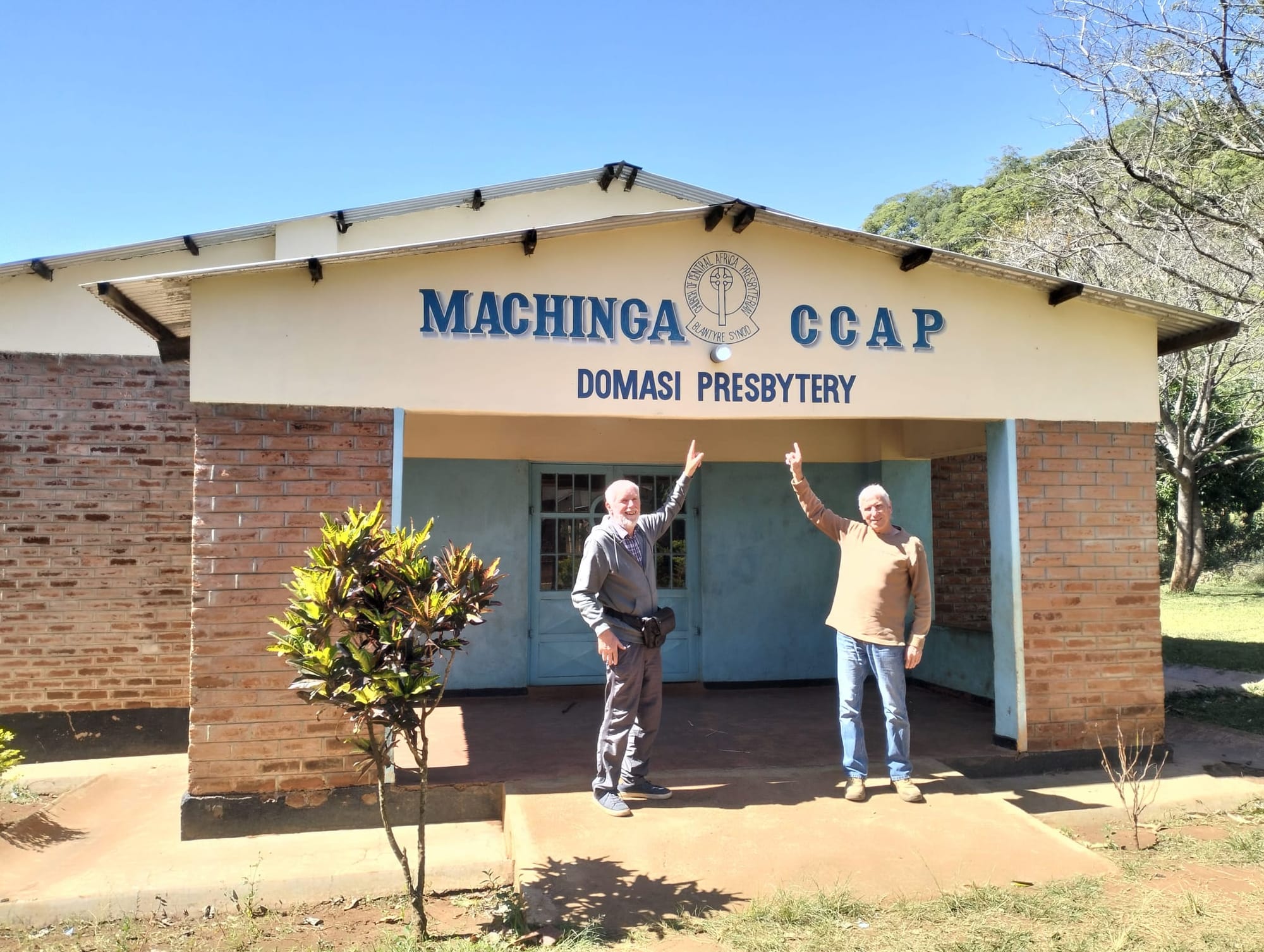
Continuing north, we passed Zomba Theological University, stirring up memories for Hui of his visit as a theological candidate 20 years prior. Our next stop was at Machinga CCAP, a church building Steve and Doug had roofed in 2010. It’s still standing proud, and it was wonderful to see how the church had been cared for and the gardens landscaped - clearly a still active congregation.
It was midday by the time we reached Liwonde so Tom guided us to the CCAP church grounds where we ate our lunch in a quiet space. There was a guard on duty, a quiet old man, and Hui gave him a Bible to read while on duty. Turning east out of Liwonde we drove another 40 mins along a road with more pot holes than tarmac. The further north we got, the frequency of mosques increased - at first rare, then every few kilometres, then almost in sight of each other! We learnt these are largely foreign-funded, often from South Africa, even in areas without an actual congregation to fill them.
Finally, we reached Mgodi CCAP, our destination for the day. People had gathered here from far and wide, excitedly waiting, anticipating a Bible in their own language. The Bibles were distributed according to the session clerks' list, and then Tom went through the big picture of the Bible with them. We briefly explained the COMA method, but by this point the afternoon was getting on and people were ready to start their long journeys home. Some walked, others strapped their precious Bibles onto their bikes before riding away through the grasses and along the dirt tracks back to their homes.
The presbytery clerk guided us to the Ntaja Sweet Centre Lodge, where the eight of us would be staying for the weekend. Before he left us for the evening, we sat down with him and his assistant and worked out where we would be on Saturday. Communication with Chiuta pre-arrival had been difficult, and plans were extremely hazy. We were provided with our own copies of the recipient lists here, which was a first, and very helpful for splitting our load of Bibles between the two cars. Locating the churches we were to visit on the map, or even confirming the time we were meant to be there, was however a rather stressful process.
By this point, the team was getting pretty tired, and we headed off to settle into our rooms. Immediately, the power went out. The couples on our team realised they would be sharing single beds, dinner was significantly delayed, and communication with the staff was difficult. These were the catalysts of a tense evening, with some debate around where we would stay for Saturday and Sunday nights. For a team of our size, we had been blessed so far with a fairly frictionless few weeks, but it was not to last. A number of us had actually felt spiritually opposed heading into this final weekend, but as John had said, this only made us more driven in the work we had to do. Our other half in Livirizi prayed for us that night, and Colin reminded them that even Paul and Barnabas had disagreed, yet they continued with their work and were reconciled after. Our team was determined to do the same. These are also some of the ways that God works to grow us as we minister.
Saturday morning, after possibly the best showers we'd had so far in Malawi, and a hearty breakfast of eggs, toast and tea, the team was refreshed. Though the air was still fragile, the morning light brought fresh perspective and a greater appreciation for the accommodation we were in. Our mission continued, and as the day went on, the team was brought together in our work and mended.
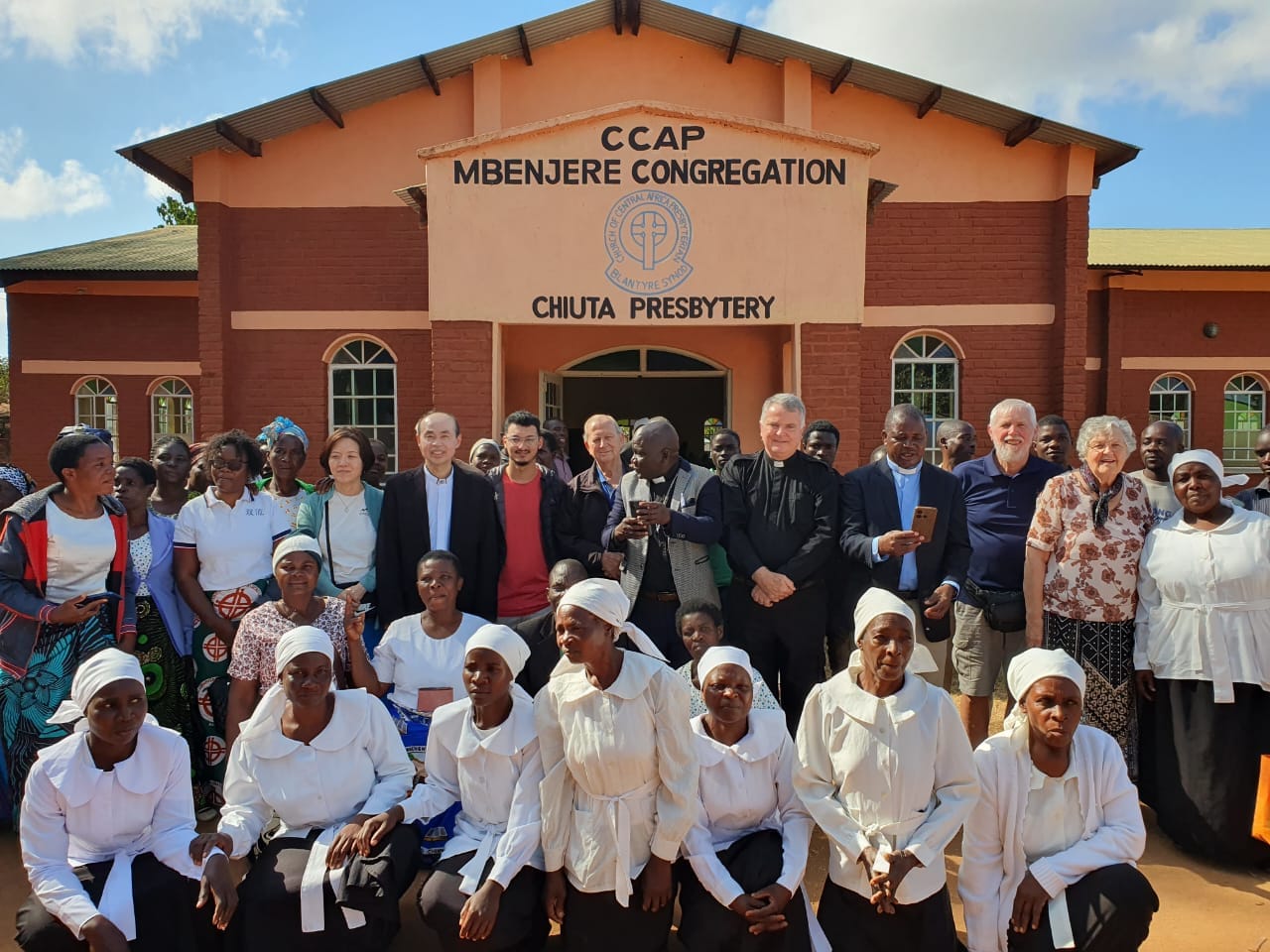
The presbytery clerk, Abusa Andrew, who we had not expected to see again, returned at breakfast. He was greatly convicted it was his duty to personally guide us. We began at Mbenjere CCAP, the church closest to our accommodation, where Diane greeted the women and David greeted the men. After a photo with the congregation, the Ma Robert went on further north to St Luke's CCAP.
This church was built many years ago, and the borer-infected wooden trusses looked as if they would give way at any moment! The brick shell of a new church was growing beside it, but many more funds will be needed to complete the building. There is, again, need for a roof.
We emptied the car of Bibles that morning. It’s hard to describe the scene of someone here receiving their very own Bible. Their gratefulness is emotional. It was a great joy to see their faces light up with the word of God in their hands.
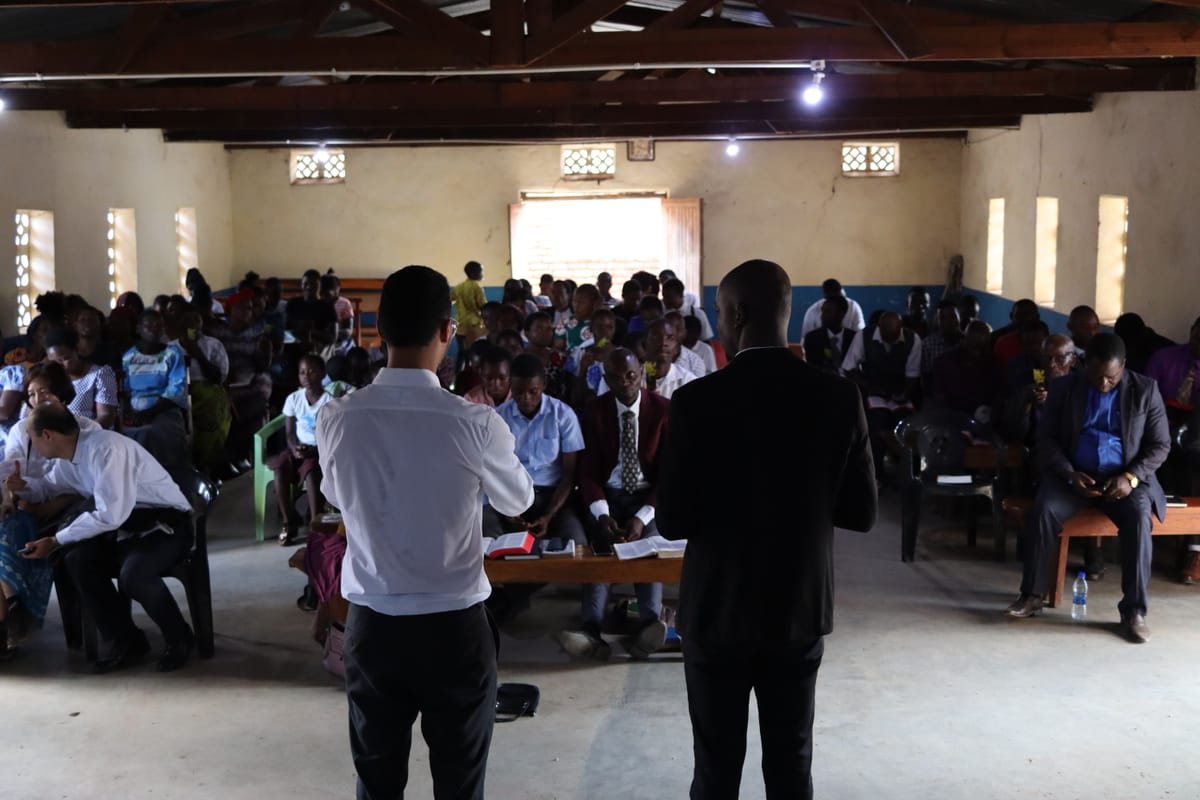
Miles led the congregation through the big picture of the Bible. Malawian Christians are brilliant oral learners, and by going slowly through the 12 steps, they were able to recite them together by the end. This has become a key part of the training we offer, though it took our team a little while to build up confidence with it, and it's been received with great interest everywhere we've gone. The steps are:
- Mulunga amalenga (God creates, Genesis 1:31)
- Timachimwa (We sin, Genesis 3:6)
- Abraham amvera (Abraham obeys, Genesis 12:2)
- Moses apulumutsa (Moses rescues, Exodus 3:8)
- Lamulu la Mafumu (Kings rule, 2 Samuel 7:16)
- Nyimbo ya Salimo (Poets sing, Psalm 27:1)
- Aneneri ayankhula (Prophets speak, Isaiah 9:6)
- Yesu aphunsitza (Jesus teaches, John 1:14)
- Yesu afa ndi kuwuka (Jesus dies and rises, Luke 24:46)
- Mpingo ubadwa (Church is born, Acts 1:8)
- Atumwi alemba (Apostles write, Romans 12:1)
- Yesu adzabweranso (Jesus will return, Revelation 4:1)
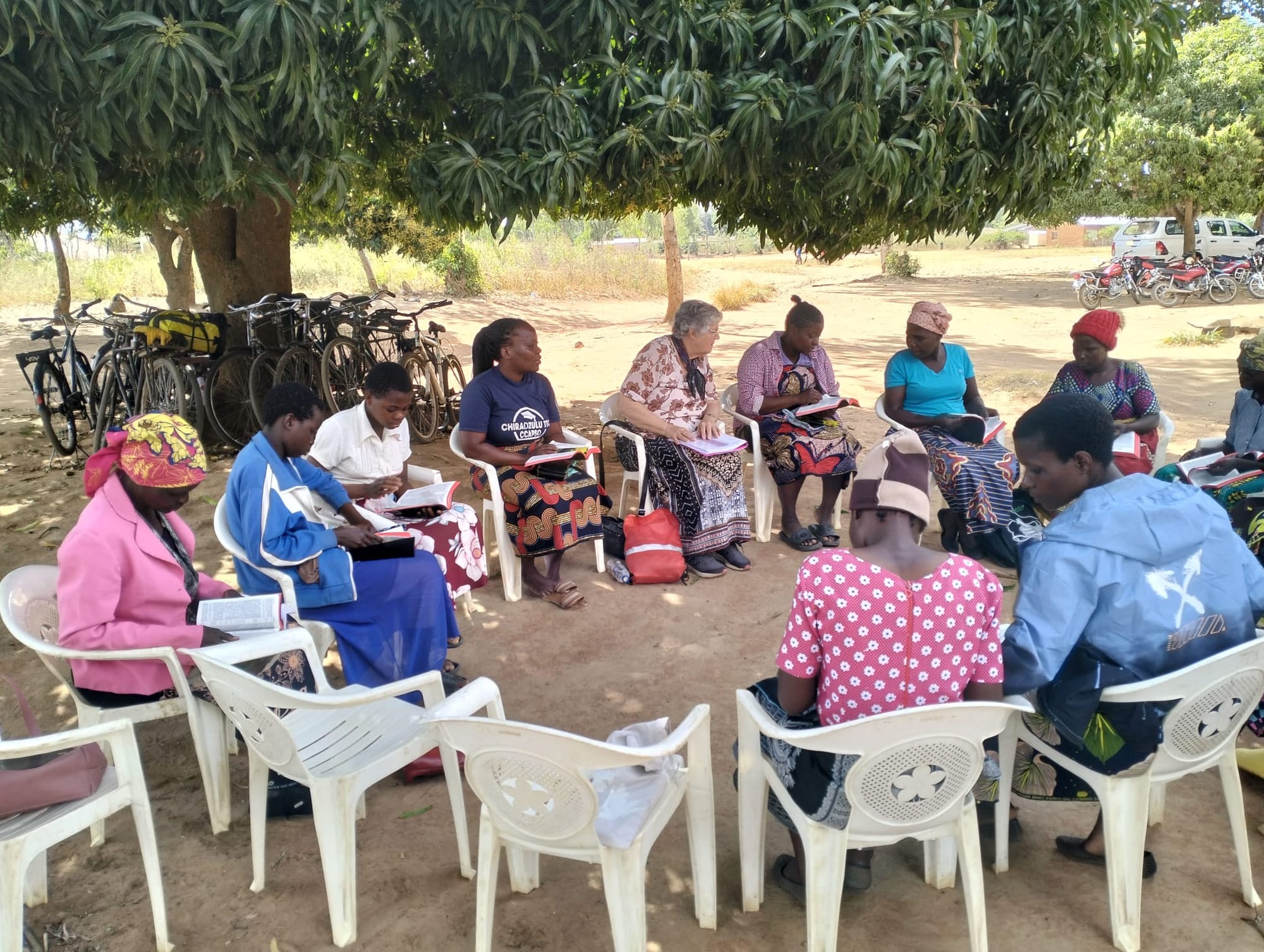
It was a privilege to then go through the Bible study method with them, Miles with the men inside and Diane with the women outside under a shady tree. Steve gathered the children of the area, Christian and Muslim alike, and shared the story of God's creation and salvation in Christ.
Abusa Andrew provided enormous guidance and help to us on Saturday. Abusa Konundu then showed Steve and Miles the way to Sonje CCAP, where church would be on Sunday. Konundu has many parishes to care for, and so not every parish gets a service every Sunday. The only way to get there was to drive off the road and down a hill, but our trusty Hilux made easy work of the trek.
Hui, Soyoung, Tom and David remained at Mbenjere, where we distributed Bibles to the congregation there and took them through the Bible study method - the whole church, as a group, working through Mark 2:1-12. From there we were guided by the assistant presbytery clerk out through markets and along winding, branching, bumpy tracks towards the Mozambique border that we could never have navigated on our own. About an hour later, we disembarked at Bamba CCAP. This is one of the oldest and most remote churches in the Synod, Christians worshipping together since 1894.
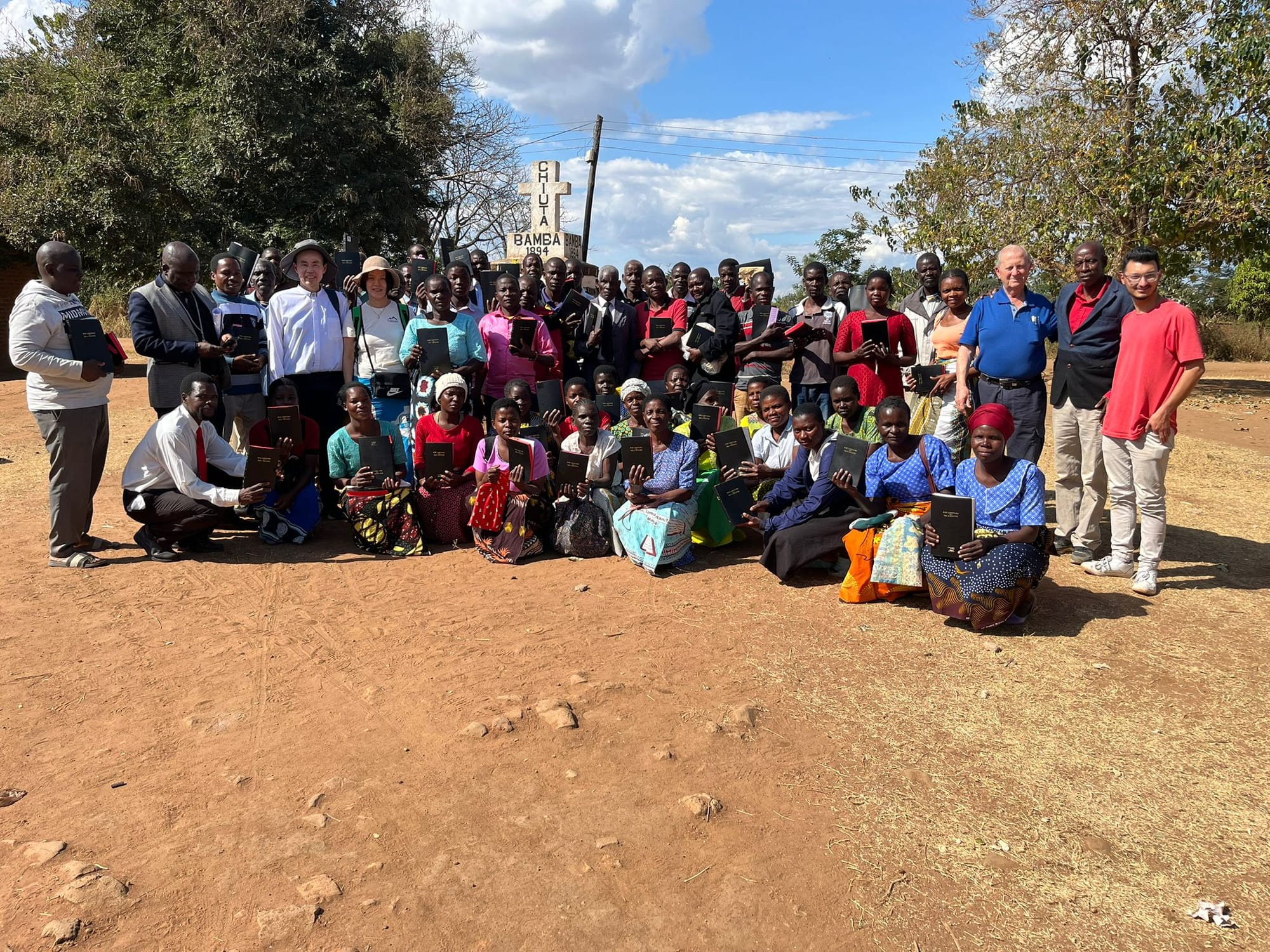
The normal introductions here were interrupted by a sudden moment of recognition. The local Abusa had only recently been ordained, but previously he had been a travelling evangelist and a member of Colin Mbawa's congregation, where David had preached 20 years earlier. When we delivered our training on the COMA Bible study method, this was also recognised, having been taught by another Australian missionary on a previous trip. So far, they had been unable to practice it without Bibles to read - so they were delighted to have God's word now in their own hands.
The gathering here was small, as many of the congregation do not have phones, and there was no way to contact them about the Saturday distribution. In fact, we learnt that many of those on the list lived on the other side of the Mozambique border. We emptied our boot of Bibles at Bamba, leaving them with Abusa Bennet, and gifted the church some hymn books as well. These Bibles will be spread across rural Malawi and Mozambique. In this area of vital ministry to the Muslim population, Bennet was greatly encouraged by this gift, assuring us that it would make more of a difference than we could imagine to his and his congregation's evangelism and faith.
This distribution, the last for the Dayspring, was a great reminder of the long-term impact of our mission. We may be heading home, but God's word will continue to transform Chiuta Presbytery long after we are gone - perhaps even long after we live.
On Saturday the Livirizi team travelled to Ulongwe CCAP. Upon arrival we were greeted by Abusa Jimmy Banda and found there was a wedding taking place inside the church. We had to wait around an hour for the wedding to finish but it was a privilege to be able to witness it.
Once again we distributed Bibles. Once again we witnessed the joy and humility of the Malawian people. Once again we delighted to split into groups and conduct COMA Bible studies together. Once again we were welcomed, thanked, fed and farewelled with heartfelt words of what a precious gift the Word of God is to give.
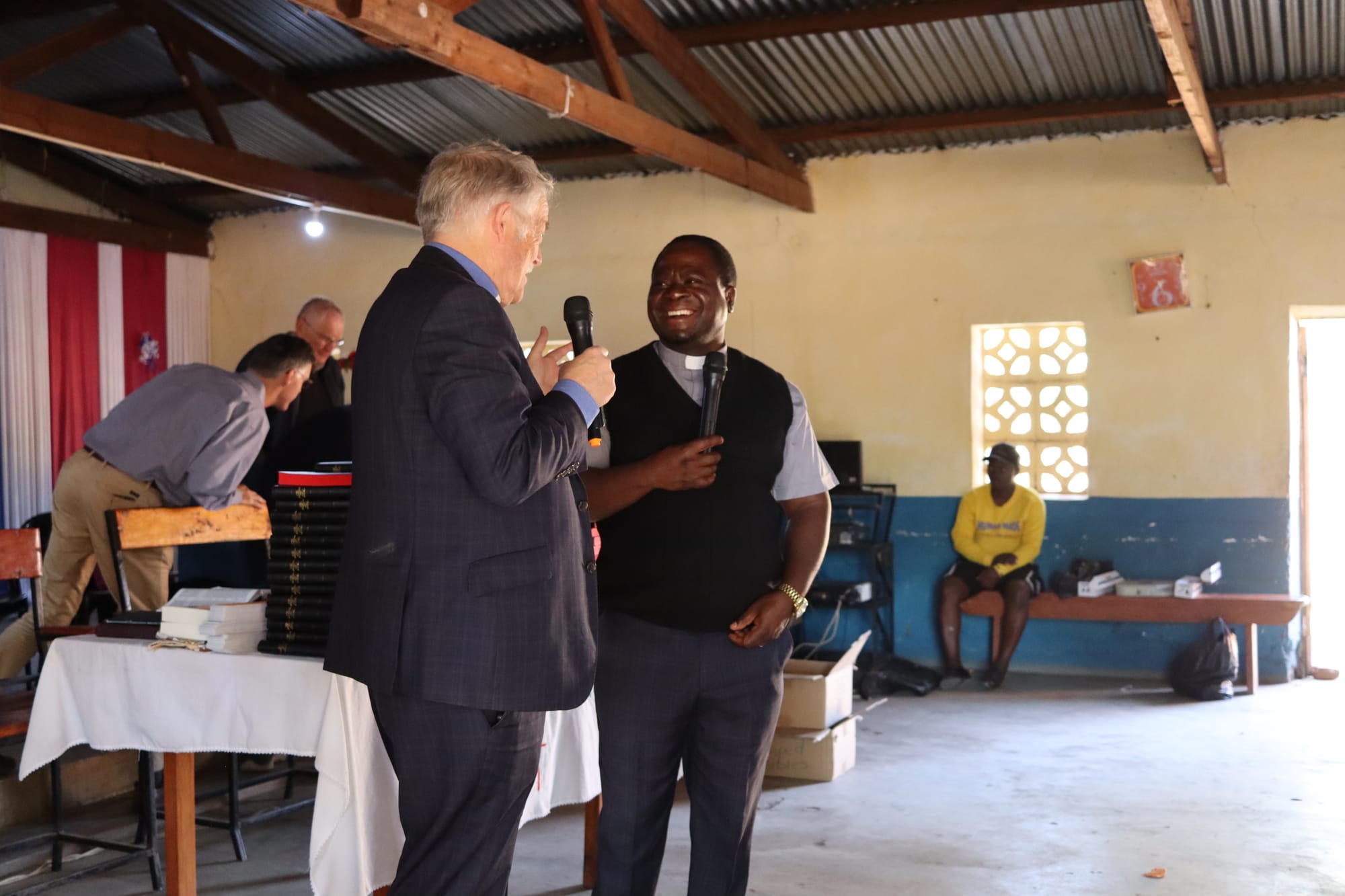
Sunday was an early morning in Chiuta for the Ma Robert team (Miles, David, Doug and Diane) with a 7am service, and the Dayspring team's (Hui, Soyoung, Tom and Steve) service at 7:30am.
The Ma Robert went to the nearest church, Mbenjere, for our first service and Miles preached inspiringly. From there, we went to Sonje CCAP for a Chichewa service. Members were waiting for us sitting patiently on the ground outside the church. Inside there was concrete flooring and a few small benches that the men sat on. The women and small children sat on the floor. Men and women often don’t sit together in church - usually it is women on the left and men on the right.
During the service one of the church elders read from his brand new Bible - using the torch from his phone to illuminate the pages as it was quite dim inside with no electricity. There were a few choirs, all a cappella and in beautiful harmony. It was special to be welcomed by every member that was present but shaking hands with over 100 enthusiastic people plus children can leave your hand sore!
We had two boxes of donated hymn books with us, and the Abusa decided they should be given one per family. He asked us to present them and Doug gladly took on this responsibility. They were very excited to have their own hymn book, and it brought us much joy to see and hear the congregation using them. Diane did the children’s talk using the salvation bag and the children joined in. Then nearly 2 hours into the service David preached clearly about the prodigal son. At this church there was a men’s offering bowl and a women’s one and everyone lined up to present their offerings - we've noticed the offering is a much bigger deal in Malawi than in Australia, perhaps particularly because money is so tight for these congregations.

After the service we were given lunch in the vestry - chicken, rice and fresh carrots. While the men ate, Diane returned to the ladies from the Mvano (women’s guild) and presented them with gifts of wool, needles, scarves, jewelry, bras and other women’s items. Their appreciation was given in song, and such a wonderful blessing to Diane as she finished her official mission time in Malawi.
As we left Sonje CCAP there was a poignant moment as we realised that the main mission was accomplished. This had been our final day of full ministry while in Malawi. We give thanks to the Lord that He provided the opportunity and moments of ministry that we experienced and witnessed.
Meanwhile the Livirizi team had also split in two. The Mbawa (John, Ben, Jean and Duan) headed back to Njale CCAP at 8am for a 3 hour worship service. Here Duan preached in Chichewa, as he has all three weekends - and not just by reading a script of a translated sermon, but with expression, conviction, and call and response with the congregation. They were surprised to hear a foreigner preaching clearly in their own language and it was clear that it meant a lot to them. The service was followed by a delicious Malawian lunch in the home of church member Chimwemwe (Joy). We returned home rejoicing.
As we had time and time again this weekend, at Njale we were led to ask ourselves just how much we take for granted in Australia. How much do we actually need?
At home: it’s a bed to sleep in, a kitchen to cook in and running hot water to shower under. For a school: we need shelter, desks and chairs. When one or two of these so-called necessities is removed, we feel it starkly - we notice their absence. We've no complaints at all; we want for nothing here in Malawi despite often being without running hot water for showering, and visiting schools with no desks or chairs. What about church worship: surely it’s a secure building with power supply, pulpit and pews?
Yet at Njale they have none of this world’s goods. In fact, we might conclude they have none of the required necessities for a church. What’s missing from the picture below?
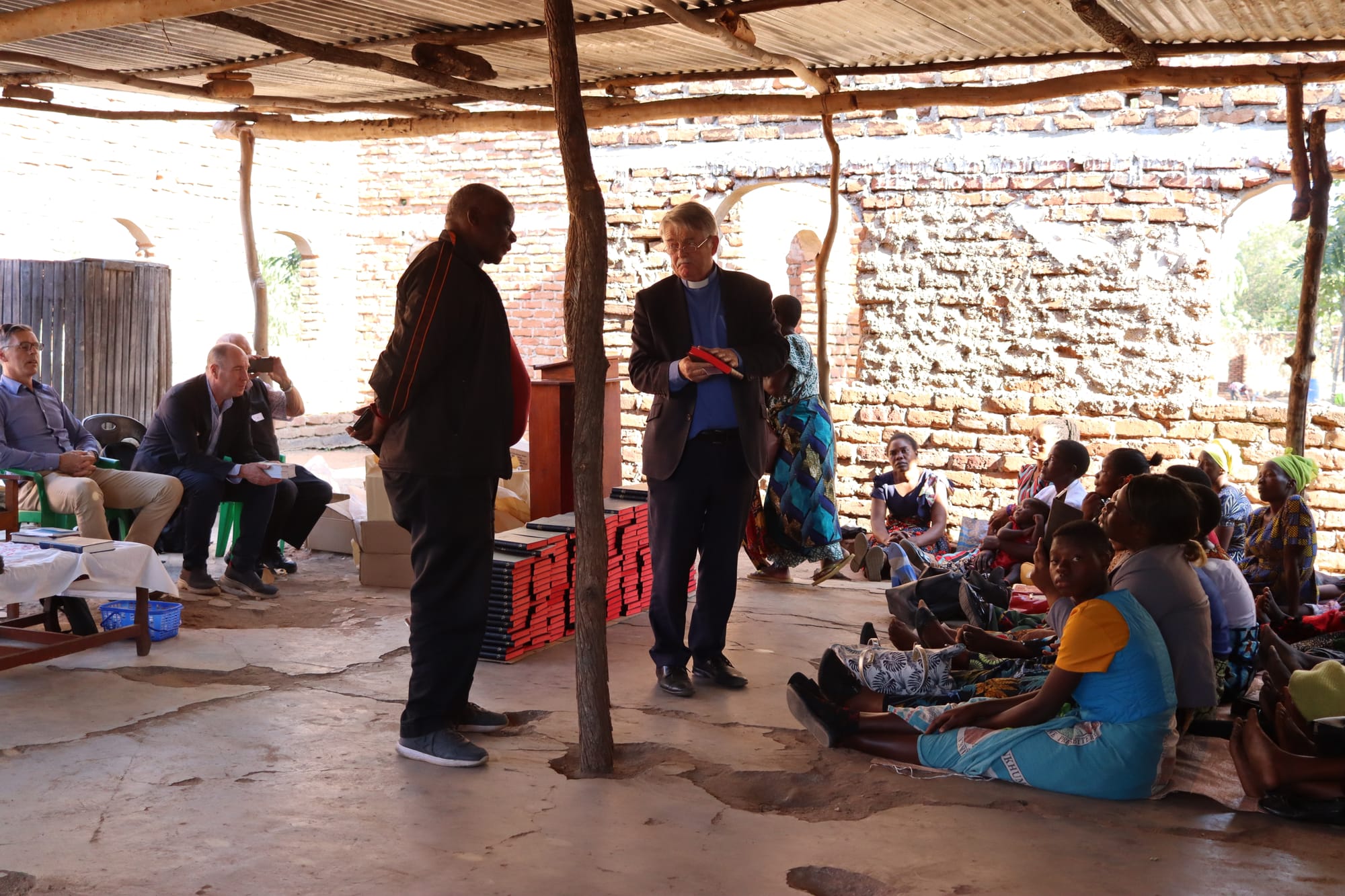
No power supply, pulpit or pews; in fact: no roof, no flooring, windows or doors. Yet, week after week, every Sunday this congregation meets for the worship of God, Bible study, evangelism training and community outreach. Some church members bring plastic chairs for worship, the rest of the women sit on the floor, young men and women sit on bricks at the side, leaning back against the walls of the building. There’s a Sunday school of around 100 children meeting outside on the dirt and the youth group meet under the shade of a tree.
To be honest with you: this is not the only roofless church we met in, and there are many and various pressing needs surrounding us. While we CANNOT come anywhere close to attending to every need we see - there are too many worthy causes - for some reason unknown, this one congregation touched John's heart. Instead of being overcome with the needs of the world, it’s better for us to focus on just one cause at a time and attend to it faithfully. We ask: could we support the congregation at Njale CCAP and roof their church for them? The pastor, Abusa Frederick, is a faithful shepherd of his people, and the congregation is led by strongly committed elders of the church.
To supply material for the trusses, other timber supports, roofing iron, 25 window frames and 5 doors wouldn’t be an insurmountable project for a local PCV church. We then could arrange a short visit one day to join in the opening dedication of the building. Such African community celebrations need to be experienced to be believed! I leave the need before you.
The Duff team (Michael, ST, Bruce and Bec) returned to Ulongwe CCAP for a 7am English speaking service. Bec and ST were asked to read the Scriptures, Michael led the main prayer and Bruce preached. The English congregation was small, but we still felt warmly welcomed.
Around 8.30am the second service began, this one in Chichewa. Once again Michael led the prayer and Bruce preached, but the Bible readings this time were read by the congregates from the new Chichewa Bibles. The hymn books also were shared around to those who didn't have their own, used with joy and dutifully returned at the end of the service to remain in the church's library for use each week.
We had been invited the previous day to run a second Bible study session with the congregation, so after a break for lunch we re-entered the church to run the 12 steps. Just after we had started we were joined by the Dayspring team from Chiuta. After hearing that we had been invited to lead more studies, they had decided to join us. After a nearly three and a half hour service at Mgodi CCAP, and Bible studies of their own, the Dayspring had not gone to a well-earned rest, but rather driven another hour to lend their assistance to our studies, to bless the Ulongwe congregation as much as we possibly could. The pastor at Mgodi had sent Hui, Soyoung, Steve and Tom out with this message:
"Thank you for thinking of us here. Indeed, we have been blessed by the Word and we will never ever forget what you have done to us today. There was a difference, today, when we sung - now that we have hymn books.
This is our chance - we have the Scriptures, we have the bookmarks - I want to see changed Christians. This is the time to be together, to discuss, to share. We have got a job to do - to serve those who do not know Christ!"
Michael led the 12 steps, with a local school teacher translating, as some final remaining Bibles were given out to those who had remained for the afternoon study. The teaching went well, with Tom joining Michael at the end to provide some applications of how to use the 12 steps to grow in understanding of any passage of Scripture.
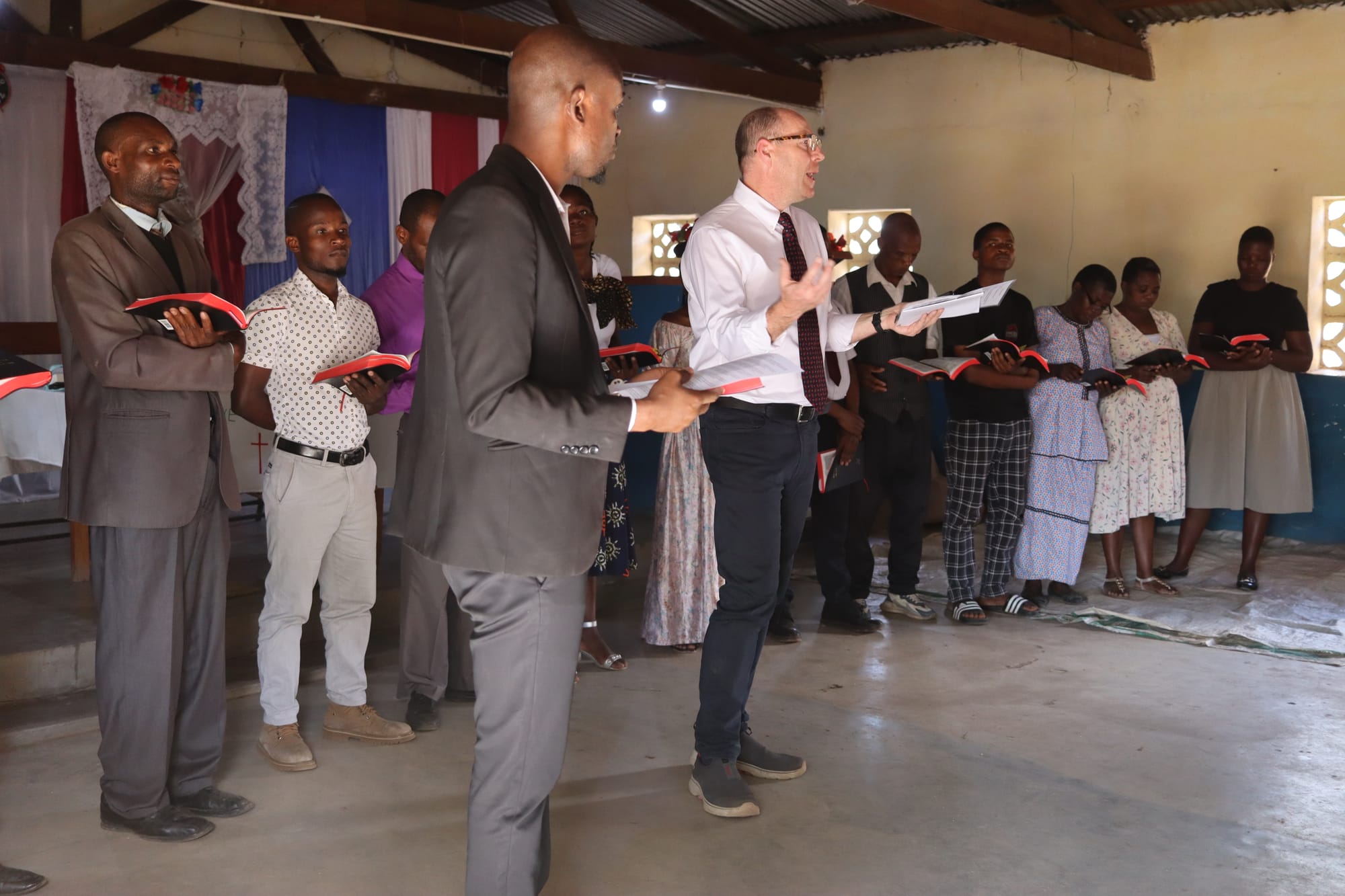
As we closed off, the congregation asked us to sing. Bec played an introduction on her flute and the eight of us sang Jesus Strong and Kind by CityAlight and Colin Buchanan, complete with Auslan actions. This was well-received, with most of the Malawians never having seen a flute before. Bec was asked to perform an original composition as well.
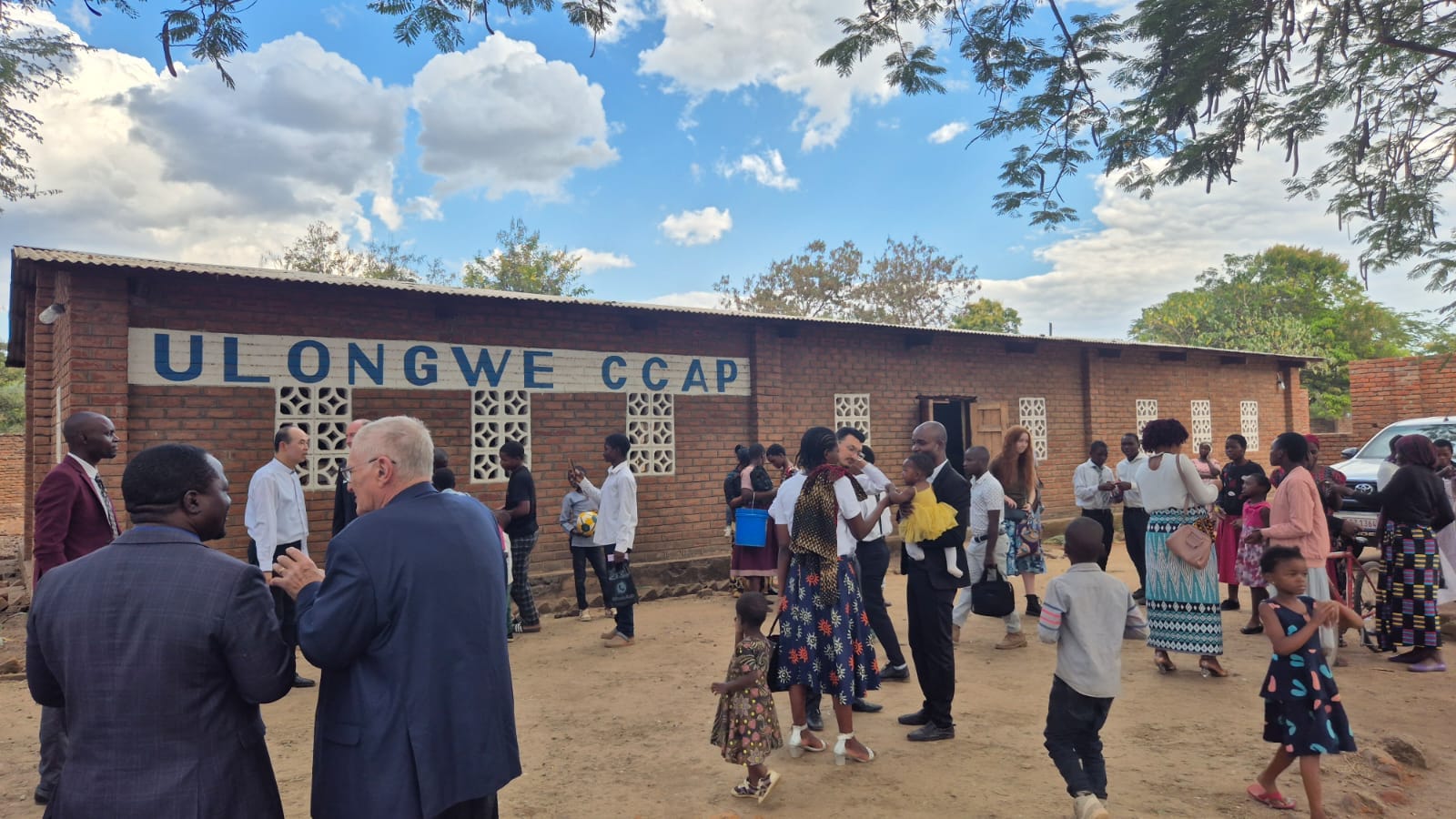
Then it was time for goodbyes. After having spent nearly two full days at Ulongwe, many in the congregation wanted to personally farewell us, and we were not eager to leave either. Photos were taken, gifts were given, phone numbers exchanged. It was bittersweet as we all realised the main part of our ministry here, after a year and half of preparation for some, was finally complete. We were able to finally tear ourselves away to return to our lodge to rest, left with these words from Abusa Jimmy, gesturing at those gathered:
"These are your brothers. These are your sisters. We are one, under God, no matter the colour of our skin. Travel well. We look forward to meeting you again in the next life."
And then we were done. The last official distribution of the 2025 Malawi Bible Mission finished, the primary work of our mission completed. Yet we know that this work is far from over, that there are many hands still empty, many hearts and minds hungry for God's work. So we pray that it would continue when we leave, and also that one day in the not too distant future we may be able to return.